
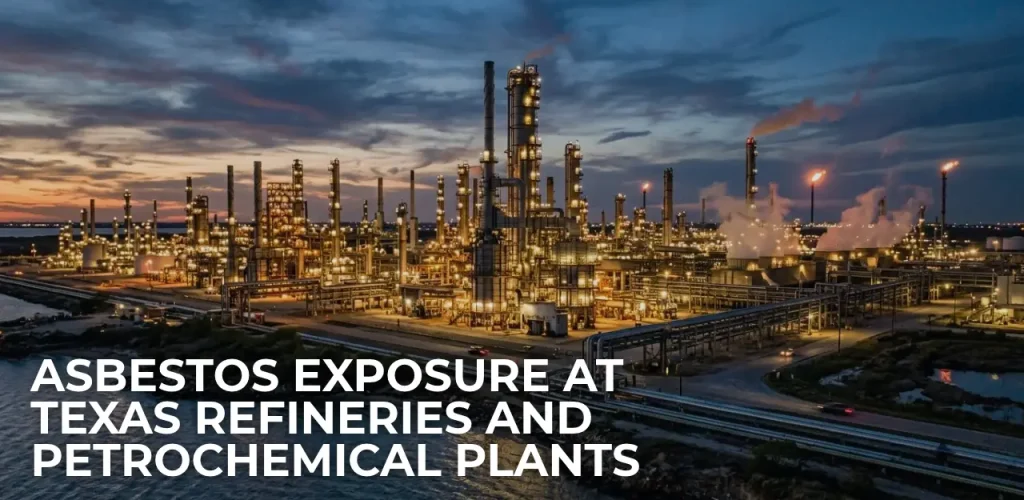
For decades, the Gulf Coast of Texas served as the beating heart of the American energy and chemical industries. Millions of men and women worked long hours inside massive industrial facilities along the coastline to keep the country running. If you or your parent worked at an oil refinery or chemical plant along the Texas Gulf Coast between the 1950s and 1980s, you likely encountered heavy concentrations of toxic insulation without adequate respiratory protection. Connecting a recent diagnosis of malignant mesothelioma or asbestos-related lung cancer to work performed decades ago can feel overwhelming. Understanding how texas asbestos exposure occurred in Texas facilities is the crucial first step toward obtaining financial compensation and legal justice.
Understanding Asbestos Exposure at Texas Petrochemical Plants and Refineries
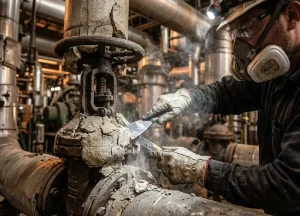
Oil refineries and chemical plants operate at extreme temperatures and under immense pressure. To contain heat, prevent catastrophic industrial fires, and protect structural steel, plant owners covered miles of steam pipes, boilers, distillation towers, and catalytic crackers with asbestos insulation. Because asbestos possessed natural resistance to heat and chemical corrosion, corporate manufacturers integrated it into nearly every high-temperature application throughout Texas facilities.
During routine maintenance, turnarounds, and expansion projects, workers regularly scraped, cut, tore off, and mixed asbestos materials. These activities released millions of microscopic asbestos fibers into the ambient air. When inhaled, these airborne fibers lodge permanently in the lining of the lungs (pleura) or abdomen (peritoneum). Over a latency period spanning 20 to 50 years, these trapped mineral fibers cause severe cellular inflammation, DNA damage, and ultimately fatal asbestos cancers.
Prominent Texas Exposure Sites Along the Gulf Coast Industrial Belt
Occupational asbestos contamination was systemic across every major industrial hub in the Lone Star State. Heavy asbestos exposure routinely occurred at specific facilities across the Gulf Coast corridor.
Houston Ship Channel Industrial Corridor
The Houston Ship Channel represents one of the dense concentration areas of petrochemical manufacturing in the world. Workers at facilities like ExxonMobil in Baytown, Shell Oil in Deer Park, Crown Central Petroleum in Pasadena, and LyondellBasell in Houston were exposed to toxic dust on a daily basis. Construction crews and maintenance personnel working on steam lines and cracking units breathed toxic fibers throughout their shifts.
Beaumont and Port Arthur Refining Complexes
In Jefferson County, the refining hubs of Beaumont and Port Arthur produced vast quantities of petroleum products. Facilities such as the Mobil Oil Refinery in Beaumont, Texaco in Port Arthur, Gulf Oil, and TotalEnergies relied heavily on asbestos block insulation, pipe covering, and refractory cement. Dust from insulation tear-outs coated clothing and equipment, placing thousands of golden triangle industrial workers at risk.
Texas City Petrochemical Facilities
Texas City was home to massive refining and chemical processing centers, including the Amoco BP Texas City Refinery, Monsanto Chemical, Union Carbide, and Texas City Refining. High-pressure steam systems and chemical processing equipment required constant re-insulation, resulting in continuous airborne asbestos exposure for plant employees and independent contractors alike.
High-Risk Job Roles Most Exposed to Asbestos in Texas Plants
While almost anyone walking through a Texas refinery prior to the late 1980s inhaled toxic dust, specific trades faced extreme day-to-day exposure because of their direct work with thermal insulation materials.
Pipefitters and Steamfitters
Pipefitters regularly cut, welded, and installed steam lines wrapped in asbestos pipe insulation. To fit new pipes or repair leaking valves, pipefitters had to cut away old insulation or remove heat-resistant gaskets, releasing thick clouds of asbestos dust into enclosed workspaces.
Insulators and Heat and Frost Workers
Insulators carried the heaviest burden of toxic exposure. They mixed dry asbestos cement powder in open buckets, cut asbestos block insulation with hand saws, and wrapped hot lines. Handling raw asbestos products daily created hazardous airborne conditions for insulators and nearby tradesmen.
Boilermakers and Millwrights
Boilermakers built and repaired high-pressure industrial boilers, furnaces, and heat exchangers. They handled asbestos refractory bricks, fireproofing blankets, and heavy boiler gaskets. Millwrights servicing heavy rotating equipment like pumps and turbines frequently scraped off old asbestos packing and gaskets.
Decades of Peak Exposure and Dangerous Asbestos Products Used
The peak era of occupational asbestos exposure in Texas refineries spanned from the early 1950s through the late 1970s, with significant hazardous exposures continuing well into the 1980s during maintenance turnarounds. During this era, chemical companies and oil refiners prioritised production speed over worker safety, despite knowing the severe health risks associated with asbestos dust.
Common asbestos-containing products used daily throughout Texas plants included:
- Thermal Pipe Covering and Block Insulation: Used to wrap miles of high-temperature steam lines and vessel walls.
- Refractory Cements and Mud: Dry powders mixed with water on-site to coat boilers and high-heat fittings.
- High-Temperature Gaskets and Valve Packing: Pre-cut or hand-cut asbestos sheets used to seal pipe flanges and pump shafts.
- Fireproofing Sprays and Protective Blankets: Applied to structural steel and equipment to insulate against fire hazards.
According to the Occupational Safety and Health Administration (OSHA):
“Every occupational exposure to asbestos can cause injury [or] disease; every occupational exposure to asbestos contributes to the risk of getting an asbestos related disease.”
How to Prove Historic Asbestos Exposure at Texas Workplaces
Because mesothelioma diagnoses typically occur 20 to 50 years after exposure, many Gulf Coast workers worry that proving historic work conditions is impossible. Many original refineries have changed ownership, changed names, or demolished old units. However, seasoned legal teams can reconstruct your exact work history using documented evidence.
Key evidence used to establish historic job site exposure includes:
- Social Security Work History Records: Detailed earnings reports that establish exact dates and employer names for every quarter worked.
- Plant Entry Records and Gate Badges: Security logs, site identification badges, and plant visitor records confirming presence at specific industrial sites.
- Co-Worker and Supervisor Depositions: Eyewitness testimony from fellow tradesmen who remember working alongside you or your family member.
- Contractor Work Orders and Invoices: Historical maintenance contracts detailing which companies supplied or removed insulation during specific plant turnarounds.
Utilizing Union Records as Primary Evidence for Legal Claims
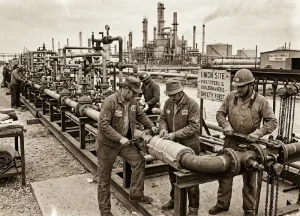
For organized labor tradesmen across the Gulf Coast, union records serve as invaluable evidence in asbestos lawsuits and trust fund claims. Local union halls maintained meticulous documentation regarding job dispatches, contractor assignments, and member work histories.
Key union documentation includes:
- Dispatch Logs and Work Books: Records showing exact dates, facilities, and contractors where local union members were assigned.
- Pension and Health Benefit Contribution History: Hourly contribution logs that verify specific job sites and employer names.
- Local Union Roll Calls and Rosters: Historical membership books from trade unions such as Pipefitters Local 211, Insulators Local 22, and Boilermakers Local 74.
Working with an experienced Texas mesothelioma legal guidance team ensures that these archived union records are properly gathered to support your legal claim.
Legal Options and Compensation Available for Exposed Workers and Families
If you or your parent developed mesothelioma after working in Texas refineries, you have legal rights to financial recovery. Compensation can help cover mounting medical expenses, specialized treatments, and lost family income. Victims and their families may seek recovery through multiple avenues:
- Asbestos Bankruptcy Trust Funds: Dozens of asbestos manufacturers filed for bankruptcy protection and established multi-billion-dollar trust funds to pay claims to injured workers.
- Personal Injury and Wrongful Death Lawsuits: Claims filed directly against non-bankrupt manufacturers, suppliers, and premises owners who negligently exposed workers to dangerous dust.
- Veterans Benefits: Many refinery workers were also military veterans exposed to asbestos during service who qualify for monthly VA disability benefits.
It is important to act quickly because Texas law enforces strict filing deadlines. Consulting an attorney about the Texas asbestos statute of limitations helps protect your family’s right to pursue fair financial recovery before time expires.
At Danziger & De Llano, LLP, our legal team brings decades of dedicated experience representing refinery workers and their families across the Texas Gulf Coast.
According to U.S. Cancer Statistics data from the Centers for Disease Control and Prevention (CDC), Texas recorded 682 mesothelioma deaths from 2020 to 2024, among the highest totals of any state.

Author: Mesothelioma Attorney Paul Danziger
Paul Danziger is a leading advocate for mesothelioma victims nationwide. As a co-founder of Danziger & De Llano, he and his team have recovered over $1 billion for their clients and helped thousands of asbestos victims and their families.

Reviewed by: Rodrigo De Llano, J.D.
Rod de Llano graduated from Princeton University with a Bachelor’s Degree in Economics. After graduation, he managed an import/export business before deciding to pursue a law degree.
Legal Disclaimer
The information provided is for educational and informational purposes only. The information on this website is not intended as legal advice and should not be used as a substitute for consulting a licensed attorney. Legal outcomes and laws can vary by jurisdiction, and only a qualified lawyer can provide guidance tailored to your situation.