
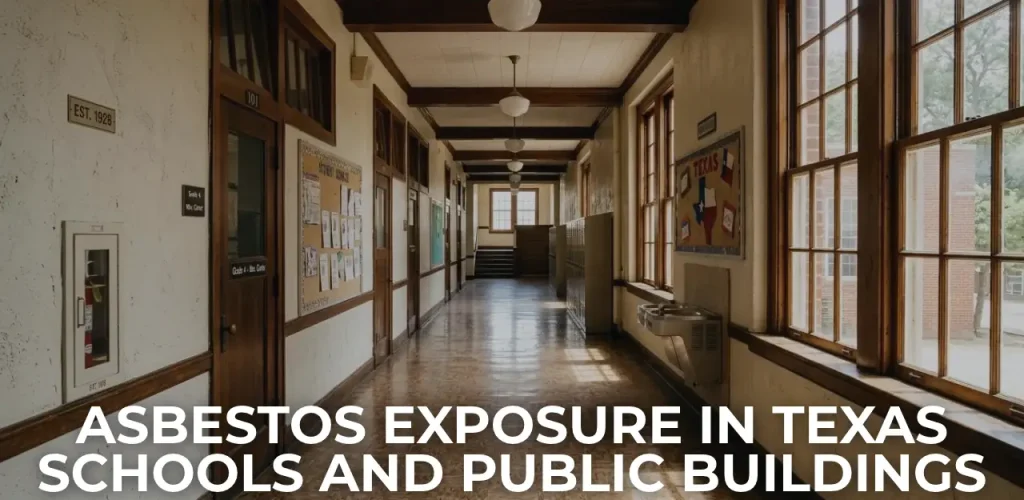
Asbestos in schools remains a real occupational hazard for Texas teachers, custodians, and maintenance workers. Many Texas school buildings and public facilities built before 1980 still contain asbestos-containing building materials. When those materials are damaged or disturbed during routine work, microscopic fibers can enter the air and, decades later, cause diseases such as mesothelioma and asbestos-related lung cancer.
This guide explains what Texas school districts are required to do under federal law, which buildings and job roles carry the most risk, and what options district employees have after a diagnosis.
Is There Still Asbestos in Schools in Texas?
Yes. Federal law does not require schools to remove asbestos that is in good condition. Instead, districts must find it, track it, and manage it in place. As a result, many older Texas campuses still contain asbestos in floor tiles, pipe insulation, ceilings, and walls. The risk rises when those materials age, crack, or get disturbed during repairs.
What AHERA Requires Texas School Districts to Do
In 1986, Congress passed the Asbestos Hazard Emergency Response Act (AHERA). It applies to all public K-12 schools and private non-profit schools, including charter schools. The EPA sets the federal rules, and the Texas Department of State Health Services (DSHS) runs the AHERA program in Texas.
“AHERA requires schools to have an asbestos management plan (AMP). An AMP details if and where asbestos-containing building material (ACBM) is present inside school buildings.”
Source: Texas DSHS AHERA guidance on asbestos management plans
Under AHERA, Texas school districts must:
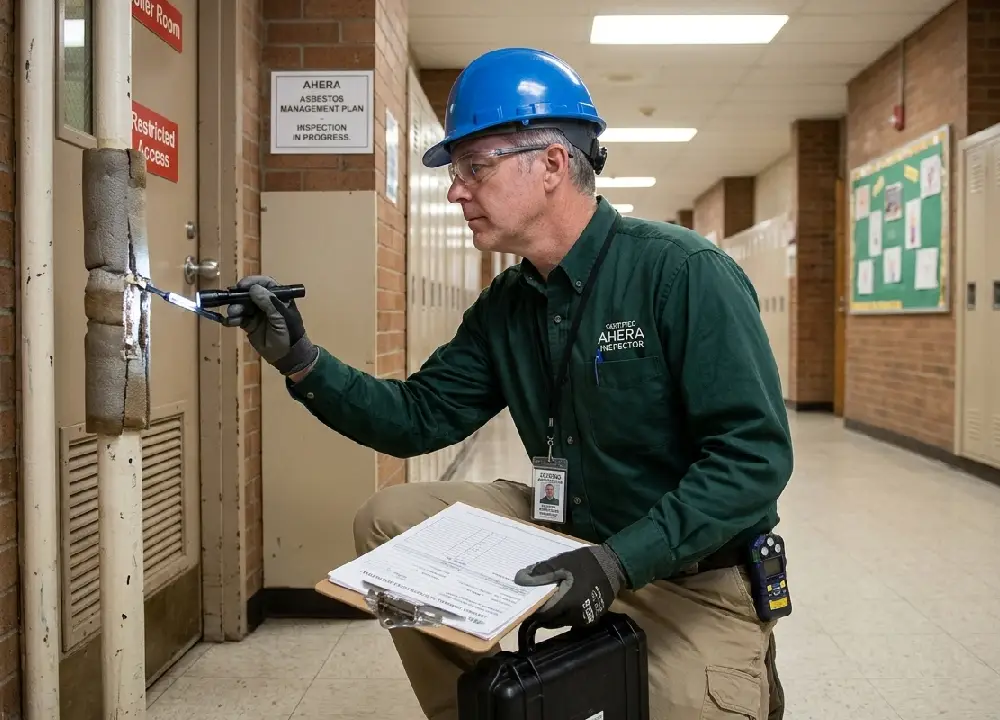
- Inspect for asbestos: Complete an original inspection of every school building, then have accredited inspectors re-inspect known asbestos materials every three years.
- Monitor every six months: Conduct periodic surveillance of known or suspected asbestos-containing materials to check for damage.
- Keep an asbestos management plan: Maintain an up-to-date plan at each school, including a blueprint showing where asbestos remains and records of any response actions.
- Notify staff and parents yearly: Tell parent, teacher, and employee organizations once a year that the plan is available, and make it available for inspection within five working days of a request.
- Train custodial staff: Provide asbestos-awareness training to custodial and maintenance staff.
- Name a designated person: Appoint a contact responsible for the district’s AHERA compliance.
Which Texas School Buildings Are Most Likely to Contain Asbestos?
Schools built or renovated before 1980 carry the highest risk. Many Texas campuses went up during the enrollment boom of the 1950s through the 1970s, when asbestos was widely used for its heat resistance, fireproofing, and low cost. District administration buildings, field houses, and other public facilities from the same era often contain the same materials.
Common Asbestos-Containing Materials in Older Schools
- Vinyl floor tiles and black mastic: 9-inch by 9-inch floor tiles in classrooms, hallways, and cafeterias, along with the black adhesive beneath them, often contain asbestos.
- Ceiling materials: Spray-applied acoustic plaster and ceiling tiles in auditoriums, gyms, and classrooms can be friable, meaning they crumble easily.
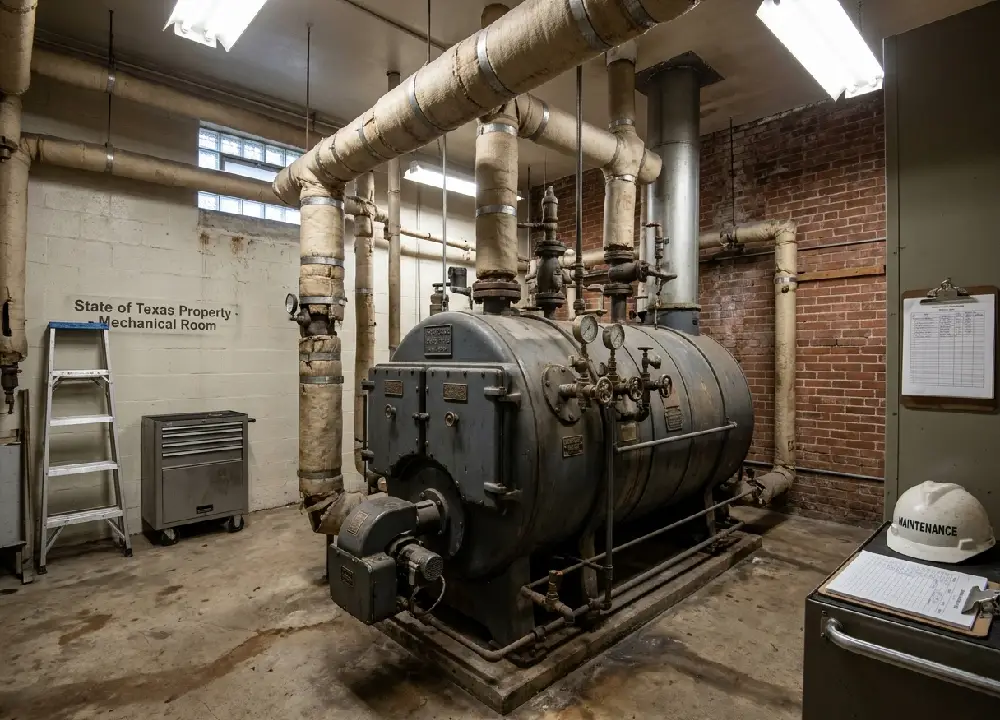
- Pipe and boiler insulation: Thermal insulation on steam pipes, boilers, and water heaters in mechanical rooms is among the most hazardous sources of airborne fibers.
- Transite products: Cement-asbestos panels, lab countertops, and roofing sheets were common on older campuses.
Boiler rooms and pipe chases in older schools posed thermal insulation hazards similar to those documented in Texas refinery asbestos exposure cases, putting maintenance tradespeople at particular risk.
Which School Jobs Have the Highest Asbestos Exposure Risk?
Anyone in an older building can be exposed when materials deteriorate, but workers who physically disturb building materials face the greatest risk.
Maintenance Workers and HVAC Technicians
Maintenance mechanics, pipefitters, electricians, and HVAC technicians work in ceilings, crawl spaces, and boiler rooms. Drilling into plaster, pulling conduit, or repairing steam lines can disturb pipe insulation and release fibers directly into their breathing zone.
Custodians and Janitorial Staff
Custodians who strip, buff, and burnish vinyl floor tiles with high-speed machines can wear down asbestos flooring and create dust. Sweeping up broken tiles or fallen ceiling debris without HEPA-filtered equipment adds to that exposure.
Teachers and Classroom Staff
Teachers may be exposed when pinning or mounting displays into asbestos-containing plaster walls, or when working in classrooms with damaged ceiling tiles that shed dust onto desks and floors.
What Can a Texas School District Employee Do About Asbestos?
If you believe your workplace contains damaged asbestos materials, these steps can protect your health and your legal options:
- Request the asbestos management plan: Ask your district’s AHERA designated person, in writing, to review the plan for your campus and confirm whether materials in your work areas have been identified.
- Report damage in writing: Report crumbling insulation, cracked ceiling tiles, or broken floor tiles to district administrators, and keep copies.
- Do not disturb suspect materials: Leave cleanup and repairs to trained, accredited professionals, as required under federal asbestos laws and regulations.
- Keep a work history log: Record your job titles, campuses, buildings, room numbers, and any projects where you saw dust or damaged materials.
- Tell your doctor: Share your exposure history and ask whether imaging or pulmonary function testing makes sense for you.
- File a complaint if needed: If you believe your district is not following AHERA, you can file a complaint with Texas DSHS.
Asbestos Claims for Texas School Employees: Your Legal Path
Mesothelioma and other asbestos diseases often appear 20 to 50 years after exposure, so many diagnoses come long after someone has left the job. Workers’ compensation is not always the only option. Many former school employees can pursue claims against the companies that manufactured, sold, or installed the asbestos products used in their buildings.
Texas asbestos lawsuits follow Chapter 90 of the Texas Civil Practice and Remedies Code, which sets specific medical reporting requirements before a case can move forward. An experienced attorney can help you meet them.
Depending on your work history, options may include:
- Asbestos trust fund claims: Many bankrupt asbestos manufacturers set up trusts to pay victims, often without a trial.
- Personal injury lawsuits: Claims against solvent manufacturers and contractors who failed to warn about asbestos hazards.
- Wrongful death claims: Claims by surviving family members after a loved one dies from an asbestos-related disease.
Learn more in our guide to occupational asbestos exposure in Texas.
Asbestos in U.S. Schools by the Numbers
According to a 1984 EPA survey of asbestos in schools, about 34,800 U.S. schools were believed to have friable asbestos-containing materials, potentially exposing an estimated 15 million students and 1.4 million school employees.
If you or a loved one was diagnosed with mesothelioma or another asbestos-related disease after working in a Texas school or public building, the attorneys at Danziger & De Llano LLP can review your work history and explain your legal options.

Author: Mesothelioma Attorney Paul Danziger
Paul Danziger is a leading advocate for mesothelioma victims nationwide. As a co-founder of Danziger & De Llano, he and his team have recovered over $1 billion for their clients and helped thousands of asbestos victims and their families.

Reviewed by: Rodrigo De Llano, J.D.
Rod de Llano graduated from Princeton University with a Bachelor’s Degree in Economics. After graduation, he managed an import/export business before deciding to pursue a law degree.
Legal Disclaimer
The information provided is for educational and informational purposes only. The information on this website is not intended as legal advice and should not be used as a substitute for consulting a licensed attorney. Legal outcomes and laws can vary by jurisdiction, and only a qualified lawyer can provide guidance tailored to your situation.