
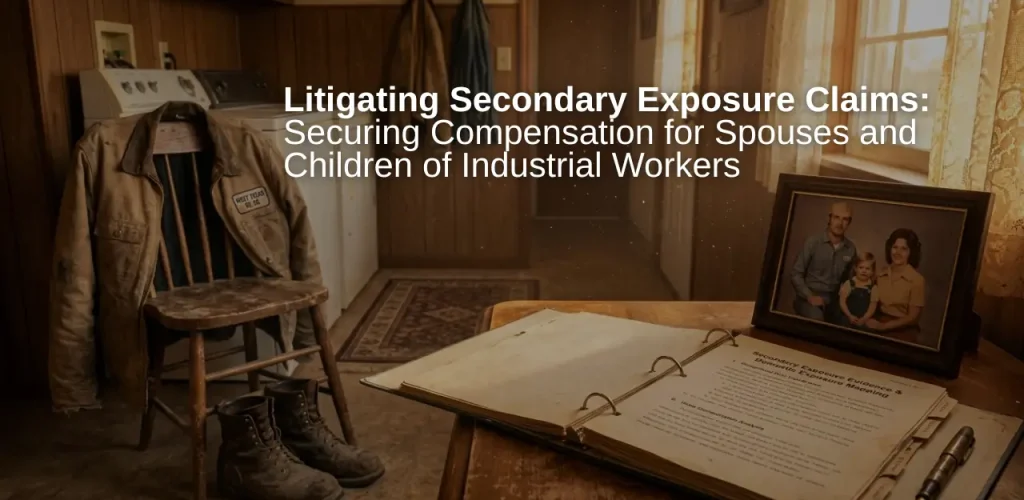
For decades, severe occupational hazards were not contained strictly within the walls of Texas industrial sites. Chemical plants, oil refineries, and shipyards throughout the Gulf Coast processed massive quantities of toxic materials daily. While male workers bore the initial brunt of on-the-job exposure, thousands of families unknowingly faced devastating risks at home through secondhand contamination.
When an industrial employee worked with asbestos, microscopic fibers clung heavily to their hair, skin, and work clothing. Upon returning home, routine daily activities like hugging a child or washing work clothes released invisible airborne fibers into the domestic environment. Spouses and children who never stepped foot inside a factory or refinery frequently breathed in these hazardous particles day after day. Decades later, these family members face severe diagnoses such as malignant mesothelioma.
If you or a family member developed an illness due to take-home dust, understanding how mesothelioma compensation works is the critical first step toward holding accountable the negligent manufacturers who failed to warn workers and their families.
Understanding Take-Home Exposure and the Legal Basis for Liability
A secondary asbestos exposure claim arises when an individual develops an asbestos-related illness not from direct workplace handling, but through contact with someone who brought toxic dust home. In Texas, establishing liability for secondary exposure requires proving that manufacturers and premises owners knew or should have known about the severe risks of domestic contamination and failed to take reasonable protective steps.
The Science of Secondary Contamination
Asbestos fibers are microscopic, highly durable, and easily friable, meaning they break down into dust that floats in the air for hours. When a worker handled insulation, gaskets, or fireproofing materials, these fibers bonded to heavy canvas or cotton work clothes. Simple household motions, including:
- Shaking out dusty clothes before loading them into washing machines
- Sweeping up dust brought in from work boots
- Direct physical affection and bodily contact upon arriving home
re-suspended these toxic fibers into domestic breathing zones. Because mesothelioma has a long latency period of 20 to 50 years, many children and spouses exposed during the mid-to-late 20th century are only now being diagnosed.
Proving Duty of Care in Secondary Mesothelioma Claim Rules
Litigating a secondary mesothelioma claim requires overcoming complex legal hurdles regarding “duty of care.” Defense attorneys frequently argue that companies owed no legal duty to individuals outside their physical workplace. However, experienced trial lawyers demonstrate that major asbestos manufacturers were well aware of take-home hazards as early as the 1930s and 1940s, yet failed to provide on-site changing rooms, showers, or warnings to prevent workers from carrying toxic dust home to their families.
Navigating Texas Legal Standards for Secondary Asbestos Claims
Texas maintains rigorous legal guidelines for asbestos litigation, particularly under Chapter 90 of the Texas Civil Practice and Remedies Code. Winning a secondary exposure lawsuit requires establishing a direct legal link between the specific products used by the primary worker and the resulting diagnosis of the family member.
“Secondary exposure occurs when people who do not work directly with asbestos are exposed to asbestos fibers brought home on the clothing, shoes, skin, or hair of workers.”
Essential Evidence Required for Second-Generation Victims
To build an indisputable secondary asbestos exposure lawsuit, legal teams must construct a comprehensive historical and medical evidence trail. Key required evidence includes:
- Primary Exposure Proof: Detailed employment records, union logs, co-worker testimony, and site records establishing where and when the primary worker was exposed to specific asbestos products.
- Domestic Connection Evidence: Detailed depositions or testimony demonstrating the routine handling, washing, or cleaning of contaminated clothing by the spouse or child.
- Pathological Verification: Medical records and pathology reports explicitly confirming a diagnosis of malignant mesothelioma or asbestos-related lung cancer.
Maximizing Payouts Through Asbestos Trust Funds and Trial Litigation
Victims of secondary exposure are not restricted solely to traditional court litigation. Many negligent asbestos manufacturers filed for Chapter 11 bankruptcy and established an asbestos trust fund to satisfy current and future liabilities. Secondary exposure victims possess full legal standing to file claims against these multi-billion-dollar trusts.
A national trial firm with deep Texas roots systematically analyzes every potential source of recovery. By combining trust fund claims with direct civil litigation against viable, non-bankrupt defendants, trial attorneys aggressively maximize total financial recovery to cover staggering medical costs and family loss.
Evaluating Key Exposure Sites Across Industrial Sectors
Secondary exposure claims frequently trace back to heavy industrial facilities across the Gulf Coast and nationwide. Workers brought high levels of toxic dust home from specific high-risk facilities:
| Industry / Job Site | Primary Source of Dust | Common Household Exposure Vector |
|---|---|---|
| Oil Refineries & Chemical Plants | Pipe insulation, boilers, valves, steam lines | Washing heavy, dust-caked work coveralls and uniforms |
| Gulf Coast Shipyards | Thermal insulation, engine room packing, bulkhead panels | Handling dusty work boots, jackets, and laundering work clothes |
| Commercial & Residential Construction | Joint compound, drywall mud, roofing felt, insulation | Shaking out dusty work clothes and cleaning vehicles after shifts |
Why Family Members Need Experienced Trial Litigators
Secondary exposure claims are inherently complex. Opposing corporate legal teams routinely attempt to deny responsibility, claiming domestic exposure cannot be definitively traced to their client’s specific products. Countering these tactics demands a trial firm possessing extensive product databases, historical industrial records, and access to leading medical and industrial hygiene experts.
National trial firms operating out of Texas bring the resources necessary to confront massive corporate defendants in court. They understand how state-specific filing rules interact with national trust funds, ensuring that spouses and second-generation victims receive full justice for a lifetime of innocent exposure.
Take Immediate Legal Action to Protect Your Family

Strict legal deadlines, known as statutes of limitations, apply to all secondary asbestos exposure claims. In Texas, the clock typically begins on the exact day of a formal medical diagnosis. Waiting to consult a lawyer can forever forfeit your right to financial compensation.
If you or a loved one developed mesothelioma from take-home asbestos dust, contact the legal team at Danziger & De Llano, LLP today for a free, no-obligation case evaluation to review your rights and legal options.
Key Asbestos Fact: According to scientific research published in the National Center for Biotechnology Information (NCBI), non-occupational secondary asbestos exposure accounts for up to 20% of diagnosed mesothelioma cases among women, largely driven by domestic exposure from laundering asbestos-contaminated work apparel.

Author: Mesothelioma Attorney Paul Danziger
Paul Danziger is a leading advocate for mesothelioma victims nationwide. As a co-founder of Danziger & De Llano, he and his team have recovered over $1 billion for their clients and helped thousands of asbestos victims and their families.

Reviewed by: Rodrigo De Llano, J.D.
Rod de Llano graduated from Princeton University with a Bachelor’s Degree in Economics. After graduation, he managed an import/export business before deciding to pursue a law degree.
Legal Disclaimer
The information provided is for educational and informational purposes only. The information on this website is not intended as legal advice and should not be used as a substitute for consulting a licensed attorney. Legal outcomes and laws can vary by jurisdiction, and only a qualified lawyer can provide guidance tailored to your situation.